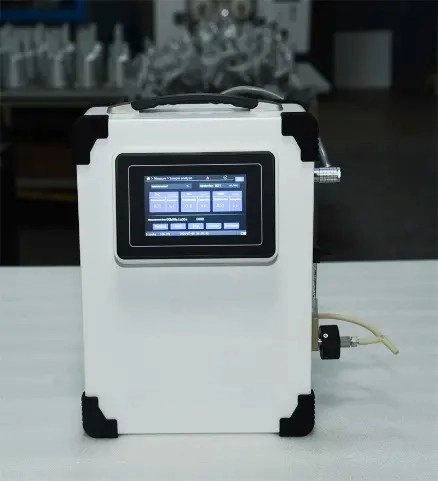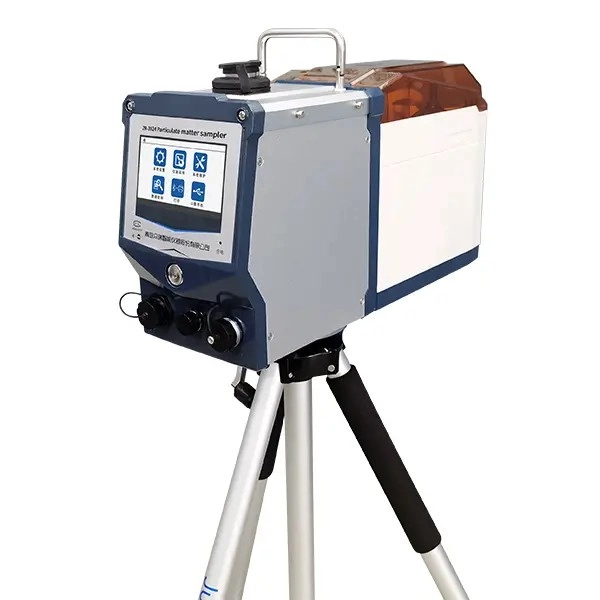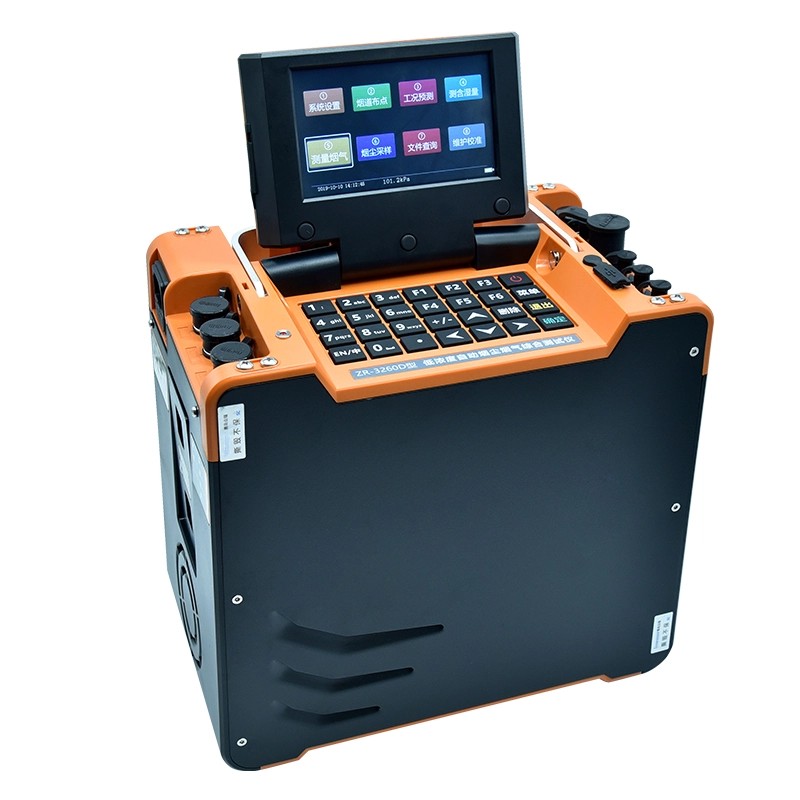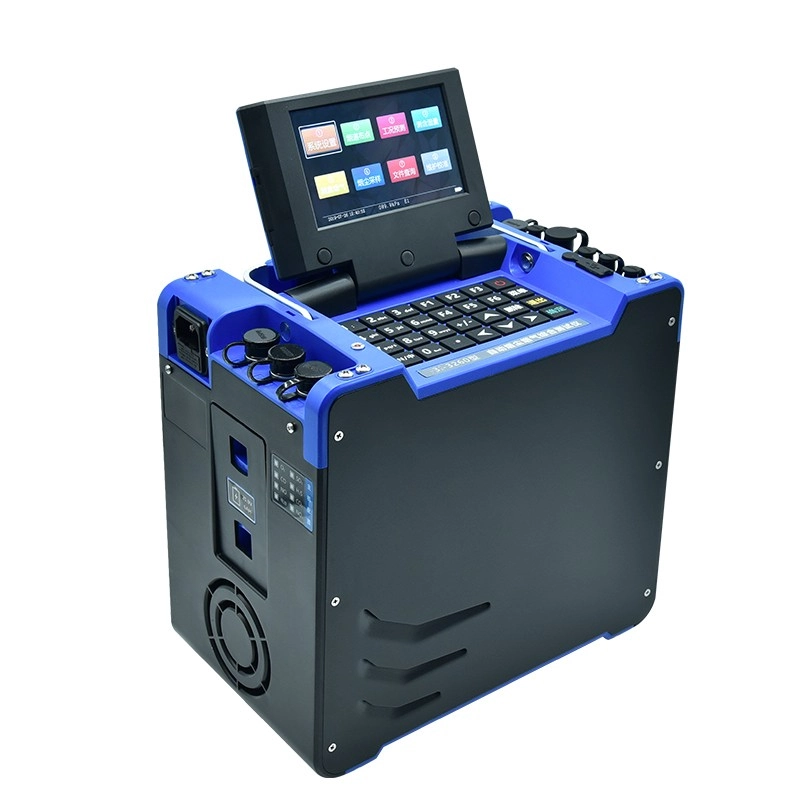

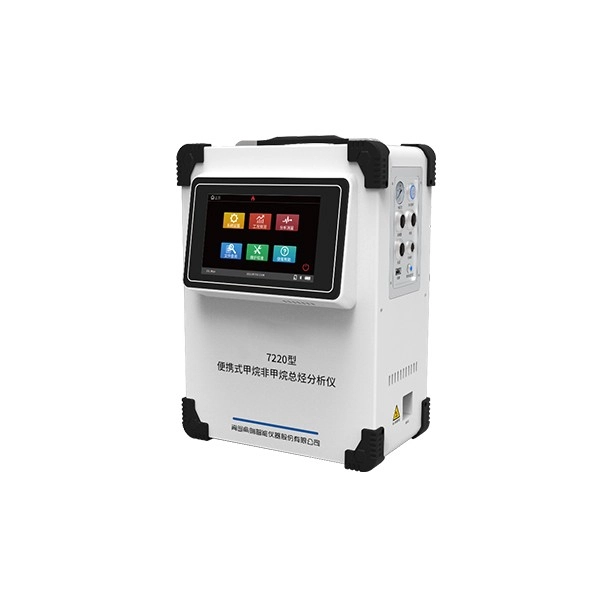
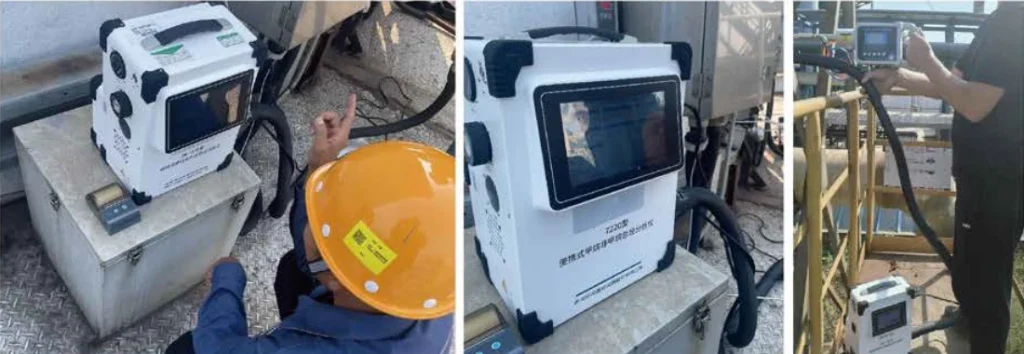
The Portable H-FID THC Analyzer (Portable Heated Flame Ionization Detector Total Hydrocarbon Analyzer) is a portable environmental monitoring instrument designed for rapid and precise on-site measurement of Volatile Organic Compounds (VOCs) and Total Hydrocarbons (THC) concentrations in gases.
Key Features
Smart control, fully traceable
- Equipped with a large-size color high-definition LCD touch screen for convenient operation.
- Built-in large-capacity memory, supports instantaneous data storage and USB export, paired with Bluetooth / wired dual printing modes, making data output flexible and efficient.
- Supports one-click time synchronization via mobile phone; dynamic password management for administrators.
- Features Beidou positioning, 4G remote data transmission, QR code printing, test chromatogram printing, system log recording, and other functions.
Stable and durable, rapid analysis
- Equipped with a large-flow, high-negative-pressure brushless sampling pump; load capacity >8kPa at 600L/min flow rate.
- Built-in high-efficiency lithium battery, with a battery life of more than 4 hours.
- The analysis cycle is 1 min, which can quickly capture trends in concentration changes.
Whole-process heat tracing, ultra-strong adaptability
- The whole machine features high-temperature heat tracing throughout, with no condensation points.
- Can be adapted to working condition measurement devices, automatically import working condition parameters, and calculate data such as standard dry concentration and emission rates.
- Small in size, light in weight, and highly portable, making it suitable for outdoor mobile monitoring scenarios.
Dual carrier gas endurance, hot-swapping of carrier gas
- The dual carrier gas design effectively improves the instrument’s endurance; meanwhile, one of the carrier gas cylinders can be disassembled for refilling during the measurement process, achieving non-stop cylinder replacement and keeping the instrument working efficiently.

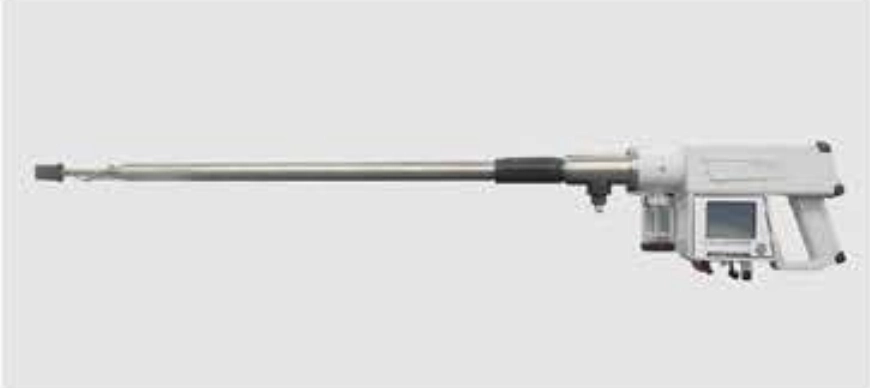
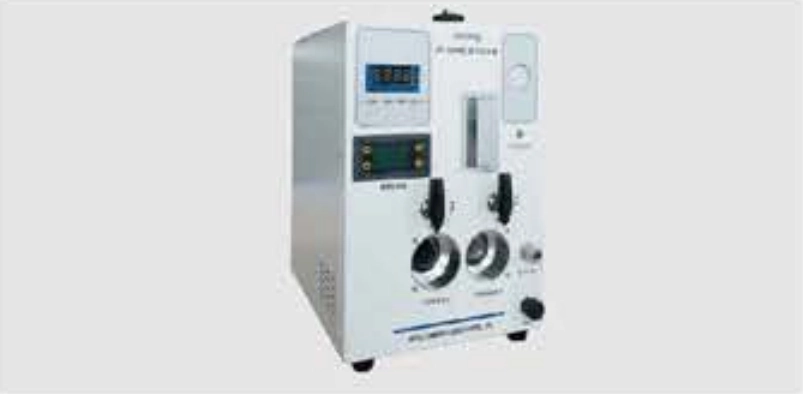
Compatible Instruments
Standards
- GB 37822-2019 Standard for fugitive emission of volatile organic compounds
- HJ 1012-2018 Ambient air and waste gas—Technical requirement and test procedures for portable monitor of total hydrocarbons, methane and non-methane hydrocarbons
- HJ 1331-2023 Stationary source emission—Determination of total hydrocarbons, methane and nonmethane hydrocarbons—Portable catalytic oxidation-hydrogen flame ionization detector method
Applications
Stationary Source Emission Monitoring: Environmental law enforcement agencies or third-party testing organizations conduct direct on-site sampling and measurement of NMHC emission concentrations at stacks and exhaust vents of chemical and pharmaceutical plants.
Leak Detection and Repair (LDAR): Inspection personnel in petrochemical refineries carry the instrument to detect trace organic gas leaks at sealing points such as pipelines, valves, flanges, and pumps.
Efficiency Evaluation of Exhaust Gas Treatment Facilities: In industrial coating, printing, and packaging sectors, it is used to measure VOC concentrations at the inlet and outlet of emission control equipment (e.g., RTO/RCO catalytic oxidizers, activated carbon adsorption units) to calculate their purification efficiency.
Automotive and Engine Exhaust Testing: Measuring the content of unburned hydrocarbons in the exhaust emissions of internal combustion engines and heavy-duty diesel vehicles.
Environmental Emergency Response: Rapid screening of hazardous organic compound concentrations in the air upon immediate arrival at the scene of sudden environmental incidents, such as chemical spills or plant fires.
Working Principle (GC-FID Technology)
The core working principle of a portable methane/non-methane total hydrocarbon and BTEX analyzer relies on Gas Chromatography (GC) combined with a Flame Ionization Detector (FID). To prevent the loss of high-boiling-point volatile organic compounds (VOCs) like BTEX during industrial emissions monitoring, these devices typically utilize H-FID (High-Temperature Flame Ionization Detection) technology with fully heated tracing.
1. Fully Heated Sampling
Exhaust gas is extracted into the analyzer through a sampling probe. Since BTEX components (benzene, toluene, ethylbenzene, xylene) have high boiling points and easily condense at cold spots, the entire sampling pathway—from the heated line and filter to the internal chromatographic valve oven and detector—must be continuously heated, typically maintained above 120°C to 180°C. This prevents condensation loss and gas path blockages.
2. Gas Chromatography Separation
The sampled gas enters the GC column system carried by a carrier gas, usually nitrogen. The instrument utilizes a sample loop and a 10-port valve or multi-valve multi-column technology for gas routing:
- Total Hydrocarbons (THC): A portion of the sample gas bypasses the separation column and directly enters the FID to measure the total amount of all hydrocarbons.
- Methane (CH4): Another portion enters the packed column. Due to its small molecular size and weak polarity, CH4 elutes first and enters the detector.
- BTEX: The gas enters a specific capillary column. Based on the different partition coefficients of BTEX in the stationary phase, components like benzene, toluene, ethylbenzene, and xylene are retained and elute sequentially, enabling precise qualitative separation.
3. H-FID Detection
The separated individual gas components sequentially enter the hydrogen Flame Ionization Detector (FID).
- A high-temperature flame is generated inside the detector by combusting hydrogen and air.
- Hydrocarbons entering the flame undergo thermal cracking and ionization, producing positive ions and electrons.
- A polarization voltage inside the detector creates an electric field that collects these ions, generating a weak electrical signal or microcurrent.
- The generated current is directly proportional to the total number of carbon atoms entering the detector, ensuring accurate quantitative concentration measurement.
4. Data Processing and Backflush
The system uses an amplifier to convert the weak microcurrent into digital signals, plotting chromatographic peaks on the interface.
- Calculation: Non-Methane Total Hydrocarbons (NMHC) concentration is calculated using the subtraction method: NMHC = THC – CH4.
- Backflush: After measurement, the system automatically switches the gas path to backflush. This purges residual heavy components, such as high-boiling-point unknown organics, from the column to prevent contamination and prepare for the next measurement cycle.
Core Advantage: Compared to standard PID (Photoionization Detector) technology, GC-FID analyzers are unaffected by ambient humidity and provide a highly linear and accurate response to hydrocarbons. This makes GC-FID the statutory standard method for stationary source VOC emissions monitoring.